Radon · stack · 6 quick cards
Radon Mitigation: How It's Done
8 cards · By the Air in the House editors, from EPA, NRPP, NRSB, International Residential Code · how stacks are made · Updated
How is a radon problem fixed?
Radon mitigation usually means a sealed pipe and an always-on fan that pull soil gas from under the floor and vent it outdoors, cutting levels by 50–99% when a certified pro designs it.
- EPA calls active subslab suction the most common and usually the most reliable radon reduction method, with typical reductions of 50–99%.
- Hire a mitigator credentialed by NRPP or NRSB, or licensed by your state where it licenses radon work.
- The exhaust must end above the roof surface and at least 10 feet above the ground (EPA's installation checklist).
- Test again no sooner than 24 hours and no later than 30 days after the fan starts, using a 2–7 day test.
- The fan must run all the time, the warning gauge needs a regular glance, and EPA suggests retesting at least every two years.
- EPA gives no price range; it says most homes cost about the same as other common home repairs.
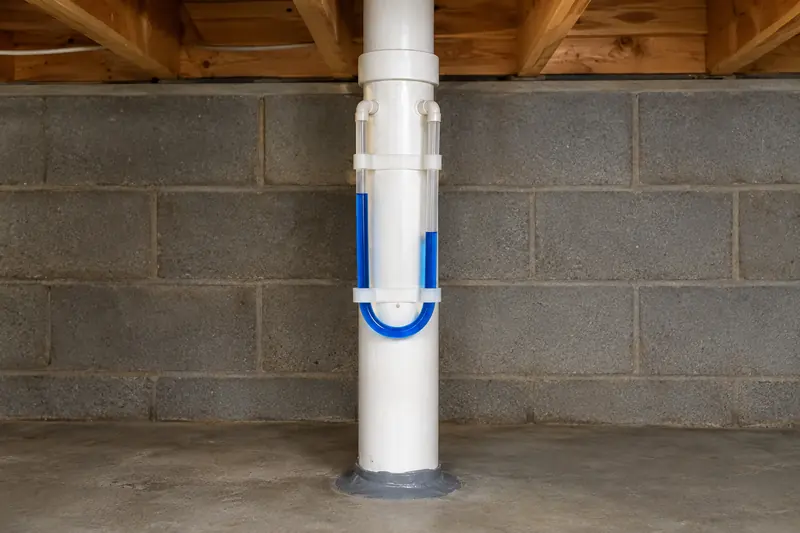
AI-made picture, not a photo of a real house How does radon mitigation work?
Radon mitigation works by changing the air pressure under the house so soil gas flows into a pipe instead of into the rooms. In the method EPA's Consumer's Guide to Radon Reduction calls the most common, a mitigator sets one or more suction pipes through the basement floor slab into the gravel or soil beneath, and a radon vent fan pulls on them. That fan creates a slight vacuum under the slab and sends the gas outdoors.
Radon reduction methods and EPA's typical results Method Where it fits Typical radon reduction Active subslab suction Basement or slab-on-grade floors 50–99% Passive subslab suction New homes built with radon-resistant features 30–70% Drain-tile or sump-hole suction Homes with drain tile or a sump pit 50–99% Block-wall suction Basements with hollow block walls 50–99% Submembrane suction Crawlspaces with dirt floors 50–99% Sealing entry routes alone Any home Not recommended alone by EPA Turn over for the detail
Often a single suction point is enough. Mitigators adapt the same idea to the house: suction on drain tile or a capped sump pit, suction on hollow block walls, or, in a crawlspace, a heavy plastic sheet over the dirt floor with the pipe drawing from underneath it. Sealing floor cracks and openings helps any of these work better, but EPA does not recommend sealing alone, because by itself it hasn't lowered radon significantly or consistently.
Who should install a radon mitigation system?
A certified or state-licensed radon mitigation professional should design and install the system. EPA's Citizen's Guide says lowering high radon takes technical knowledge and special skills.
EPA currently recognizes two national credentialing programs, the National Radon Proficiency Program and the National Radon Safety Board; some states license radon work themselves. EPA's page on finding a radon professional explains both, and your state radon office (listed on EPA's state radon contacts page) can give names. Get more than one estimate. The Consumer's Guide suggests checking each proposal for:
Turn over for the detail
- Proof of state certification or national credentials, insurance and any local licenses
- A visual inspection, and diagnostic tests where the house needs them, before design
- A warning device that shows when the system stops working
- A test after installation, and written operating and maintenance instructions
EPA says the fan's electrical connections must meet local electrical codes, and a mitigator may raise concerns about backdrafting of gas, oil or wood appliances and suggest a qualified inspector check them. That check is a combustion safety (worst-case depressurization) test, the same kind discussed on makeup air for range hoods. If you're unsure, call a licensed pro.
What should the finished system look like?
A finished system is a labeled pipe run from the slab to the outdoors, a fan outside the living space, and a gauge or alarm you can see. EPA's checklist for checking a contractor's work spells out the details:
- The system is clearly labeled so nobody changes it by accident.
- The exhaust vents above the surface of the roof and 10 feet or more above the ground, and at least 10 feet from windows, doors or other openings unless it ends at least 2 feet above them.
- The fan is not in or below a livable area; attics, garages and the outside wall are common spots. A fan mounted outdoors must be rated for exterior use under local code.
- A warning device, such as a liquid U-tube gauge, a sound alarm, a light or a dial gauge, sits where you will see or hear it, and the installer shows you that it works.
Turn over for the detail
Keep the installer's written instructions and warranty papers with your test results.
Source the documents listed on this stack's sources card
Next How do you know it worked?↓How do you know it worked?
You know it worked when a new radon test, run under closed-house conditions, comes back well under 4 pCi/L. EPA says the post-mitigation test belongs within 30 days of installation but no sooner than 24 hours after the system starts running with its fan on.
The installer may run a test of their own, but EPA recommends a separate measurement too, either by a tester with no tie to the installer or by you with a kit, to avoid any conflict of interest. A two- to seven-day test is what EPA suggests, with windows and doors closed for 12 hours beforehand and throughout. See the radon testing page for placement and reading your radon result for the number.
Source the documents listed on this stack's sources card
Next What upkeep does it need?↓What upkeep does it need?
The main upkeep is keeping the fan running and glancing at the gauge; EPA says the fan should never be turned off. If the gauge or alarm shows a problem, call a mitigator to check it.
Fans often last five years or more, and makers' warranties tend not to run past five years, so plan on an eventual repair or replacement by a pro. EPA also suggests retesting at least every two years, and testing again after big changes such as finishing a basement, which can affect how the system performs.
Source the documents listed on this stack's sources card
Next What about building a new home?↓What about building a new home?
If you're building, ask for radon-resistant features, which cost much less to put in during construction than to add later, EPA says. EPA's radon-resistant construction page describes the basic techniques, and EPA's Citizen's Guide recommends them for new homes in high radon potential (Zone 1) areas.
Passive features alone are a start, not a finish. EPA says every new home should be tested after move-in, even one built radon-resistant, and if it reads 4 pCi/L or more, a qualified mitigator can add a fan to make the system active. Some places adopt the 2024 International Residential Code's optional radon appendix (Appendix BE); the IRC lists it but it applies only where your town or state adopts it, so your local code may differ.
Video from the Pennsylvania DEP channel on YouTube: How a home radon reduction system works. That channel has no tie to Air in the House; nothing loads from YouTube except the still picture until you press play. Radon mitigation in numbers
- 50–99%typical reduction from active subslab suctionEPA Consumer's Guide to Radon Reduction
- 10 ftminimum exhaust height above the groundEPA Consumer's Guide to Radon Reduction
- 24 hoursearliest post-mitigation test after the fan startsEPA Consumer's Guide to Radon Reduction
- 30 dayslatest point for the post-mitigation testEPA Consumer's Guide to Radon Reduction
- 5 yearshow long fans often lastEPA Consumer's Guide to Radon Reduction
Chart drawn by Air in the House from figures cited in this stack. Source EPA
Next Quick cards↓
Quick cards
Short questions people ask next, one answer each.
Can a radon system be put on the outside of the house?
Yes. EPA's guide notes the pipe may run outside, and an outdoor fan must be one approved for exterior use under local code. The exhaust rules for height and distance from windows still apply.
Will a radon fan make noise or raise the power bill?
The fan runs nonstop, so it draws some power around the clock. EPA's guide notes that crawlspace methods that draw conditioned air from the home can raise energy costs; ask each mitigator what their design will add.
Can a sump pit be part of the system?
Often. EPA describes capping a sump so it still drains water while serving as the suction point; it reports typical reductions of 50–99% for this method.
Does finishing the basement affect the system?
It can. EPA suggests asking your radon contractor before major changes such as converting a basement to living space, partly because changes may affect warranties, and retesting when the work is done.
What if the retest is still high?
Call the mitigator back. EPA suggests asking before you sign whether the contract commits to a target level, such as 4 pCi/L or a lower negotiated number, and for how long.
Can an HRV lower radon?
It can help. EPA's guide says a heat recovery ventilator adds outdoor air and works best for radon when it ventilates only the basement; see ERV vs HRV for how these units differ.
Where these cards come from
This stack is based on EPA's Consumer's Guide to Radon Reduction, EPA's Citizen's Guide to Radon, EPA's pages on radon professionals and radon-resistant construction, and the 2024 IRC table of contents, all read in October 2026. It gives no installation steps, no system prices and no fan brands, by design.
- EPA EPA calls active subslab suction
- NRPP NRPP
- NRSB NRSB
- EPA EPA's page on finding a radon professional
- EPA EPA's state radon contacts page
- EPA radon-resistant construction page
- International Residential Code the IRC lists it
Cards are written by the Air in the House editors from the documents above and dated when they were last checked. How stacks are made