Kitchen · stack · 6 quick cards
Makeup Air for a Range Hood
8 cards · By the Air in the House editors, from International Residential Code, Pennsylvania Housing Research Center, EPA, Home Ventilating Institute and other documents · how stacks are made · Updated · this stack links to businesses tied to our owners, and each link says how
When does a range hood need makeup air?
Makeup air for a range hood is outdoor air brought in to replace what the hood removes; current code requires it above 400 cfm when a gas, oil or wood appliance isn't sealed-combustion or power-vented.
- IRC section M1503.6 (2024) ties makeup air to hoods over 400 cfm in homes with a natural-draft fuel appliance.
- Makeup air must roughly equal the exhaust rate, through an outdoor duct with an automatic damper.
- The 2009 IRC applied the 400 cfm rule to every big hood, and many towns still do.
- EPA lists backdrafting from furnaces, gas water heaters, wood stoves and fireplaces as a carbon monoxide source.
- Lawrence Berkeley National Laboratory reports that range hoods contribute to many failed combustion safety tests.
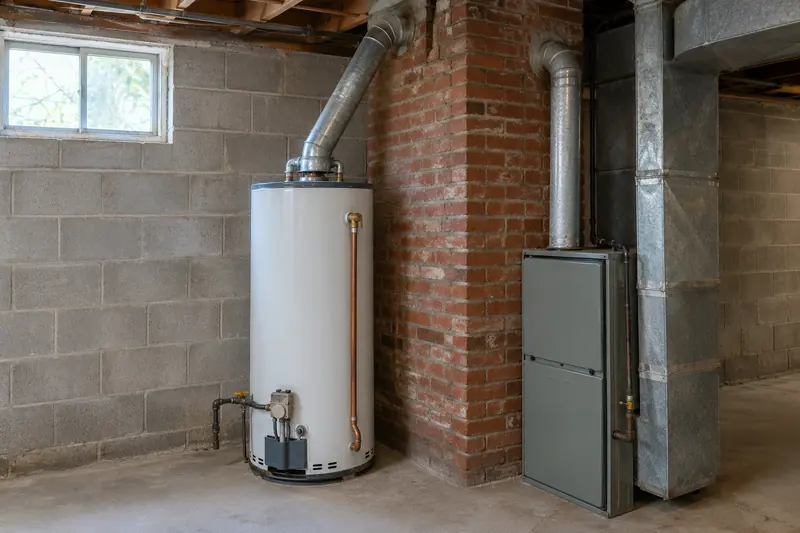
AI-made picture, not a photo of a real house What is makeup air for a range hood?
Makeup air is outdoor air brought into the house on purpose to replace the air a range hood blows outside. Every cubic foot pushed out comes back in somewhere: through cracks, a fireplace, or, worst of all, a water heater or furnace flue.
The Pennsylvania Housing Research Center (PHRC) adds the cost side: all of that outdoor air has to be heated or cooled at the homeowner's expense. Its advice is kitchen exhaust that is adequate but not excessive.
When does the code require it?
The current International Residential Code asks for makeup air when two things are true: the kitchen exhaust can move more than 400 cfm, and a gas, oil or wood appliance inside the air barrier isn't sealed-combustion or power-vented (a natural-draft water heater or furnace, say, or an open fireplace).
When the rule applies, section M1503.6 asks for makeup air at a rate approximately equal to the exhaust rate, through at least one outdoor air duct with a damper. The damper, gravity or motorized, must open automatically whenever the hood runs.
Makeup air under the 2024 IRC, by appliance type Appliance inside the air barrier Hood over 400 cfm needs makeup air? Why Natural-draft gas water heater Yes Its flue relies on warm gases rising on their own Open wood or gas fireplace Yes An open firebox can draw smoke back into the room Power-vented water heater No (code exemption) A fan pushes the flue gases out Direct-vent, sealed-combustion furnace No (code exemption) It takes its air from outdoors and vents to outdoors Turn over for the detail
The 2009 IRC was broader, applying the 400 cfm rule to any kitchen exhaust that size, and many contractor websites still quote it. Some towns kept it, so ask your building department which edition it enforces before you buy.
Why can a strong hood be dangerous?
A strong hood can lower the air pressure inside the house enough to pull exhaust gases back down a chimney or flue, which is called backdrafting. A natural-draft appliance relies on hot flue gases rising on their own; under suction, that gentle draft can stall or reverse and spill carbon monoxide into the house.
The EPA's carbon monoxide page lists back-drafting from furnaces, gas water heaters, wood stoves and fireplaces among indoor CO sources. Bath fans and clothes dryers add to the pull, the Home Ventilating Institute notes. And a tighter house gets more negative from the same fans, according to the Building America Solution Center.
Turn over for the detail
The PHRC adds that suction can also draw air in from hazardous places, such as an attached garage. If you're unsure, call a licensed pro.
What is a combustion safety test?
A combustion safety test, often called a worst-case depressurization test, checks whether your vented gas, oil or wood appliances still vent properly when every exhaust device in the house is running. A Lawrence Berkeley National Laboratory review describes the standard version as measuring depressurization with all exhaust fans on their highest settings, and notes that range hoods, often the biggest fan in the house, are contributing to failures of these tests.
Turn over for the detail
A qualified HVAC technician or home energy auditor sets up the worst realistic case (hood on high, bath fans and dryer running, interior doors placed to make it worse), then checks each appliance's draft and spillage and measures CO.
Ask for the test before a new hood goes in, again after, and whenever the house is air sealed. It goes beyond the yearly tune-up on ENERGY STAR's maintenance checklist, which covers gas connections, burner combustion and the heat exchanger.
For an example of the furnace and boiler service a local heating company lists, see the heating service page of Central Plumbing & HVAC (Central Plumbing & HVAC, a company that works with Air in the House), a plumbing and HVAC company in Bucks and Montgomery counties, Pennsylvania. Wherever you live, ask whether a company's technicians do worst-case combustion safety testing, not just tune-ups.
How is makeup air supplied?
PHRC compares three ways to bring it in:
- A dampered opening. A duct from outdoors to the kitchen with a damper that opens when the hood runs. Cheap and simple, but PHRC says it only suits small amounts of makeup air.
- A duct to the air handler. Outdoor air goes to the furnace's return, gets mixed and filtered, and a motorized damper tied to the hood switch controls it. It adds load to the heating and cooling system.
- A dedicated makeup air unit. A packaged damper, fan and heater (sometimes with a dehumidifier) that tempers the air. It costs the most but keeps rooms comfortable.
Turn over for the detail
Comfort is the practical issue: PHRC notes most design guidance aims to deliver makeup air within 10°F of room temperature. Its worked example for a 400 cfm hood on a 7°F design day in State College, Pennsylvania, needs almost 27,000 Btu/h of heat to warm that air.
The damper interlock needs a licensed electrician, and the outdoor intake through a wall or roof needs a contractor. For hood sizing, see range hood CFM; for how kitchen exhaust fits whole-house fresh air, see exhaust, supply or balanced ventilation.
Source the documents listed on this stack's sources card
Next What should you ask an installer?↓What should you ask an installer?
Before you order, ask the installer or HVAC contractor:
- What is this hood's highest rated airflow, and is it over 400 cfm?
- Which of our fuel-burning appliances are natural-draft, and which are direct-vent or power-vented?
- Which makeup air method do you recommend, will the air be heated, and how is the damper tied to the hood?
- Will you run a worst-case combustion safety test before and after, and share the results?
Turn over for the detail
A hood of 400 cfm or less that covers the front burners sidesteps much of the question. For cooking habits that help any hood, see gas stove ventilation.
Source the documents listed on this stack's sources card
Next Makeup air numbers to know↓Makeup air numbers to know
- 400 cfmhood capacity that triggers the IRC makeup-air ruleInternational Residential Code (2024)
- 27,000 Btu/hheat to warm 400 cfm of outdoor air on a 7°F design day (State College example)Pennsylvania Housing Research Center
- 10°Fdesign target for makeup air temperature versus the roomPennsylvania Housing Research Center
- more than 200US deaths a year from non-fire CO poisoning tied to consumer productsCPSC
Chart drawn by Air in the House from figures cited in this stack.
Quick cards
Short questions people ask next, one answer each.
Does a recirculating hood need makeup air?
No. A ductless hood returns air to the kitchen, so it doesn't depressurize the house, but it also doesn't remove moisture or carbon monoxide.
Can an open window count as makeup air?
Not for code purposes. M1503.6 calls for an outdoor air duct with a damper that opens automatically when the hood runs, and a window depends on someone remembering it.
Does a heat pump or all-electric home need makeup air for a big hood?
Not under M1503.6, which hinges on a fuel-burning appliance that isn't direct-vent or power-vented. Some towns still apply the older rule to every hood over 400 cfm, though.
Do two smaller fans running together count toward 400 cfm?
The code applies to each exhaust system able to move more than 400 cfm. A combustion safety test, though, runs every fan at once, because the house feels their total pull.
How do you know if a water heater is natural-draft?
The label and the installation manual say which venting type it is. As a rough guide, a power-vented heater has a fan on top, a direct-vent one has piping that brings its air in from outdoors, and a natural-draft one has neither, just a metal flue rising to a chimney. When in doubt, ask the technician at the next service visit.
Will makeup air make the kitchen cold?
Unheated winter air can feel like a draft, which is why PHRC suggests delivering it within about 10°F of room temperature. A heated unit or a duct to the furnace's return tempers it first.
Parts and pages this stack names
About these links: the people behind Air in the House also own Plumbing Supply and More, SoftPro Water Systems and Quality Water Treatment, and work with Central Plumbing & HVAC. Nobody pays to be mentioned here. Our notes on these cards are ours; what a linked page says is that business's own claim. Who owns this site
A heating company's service page
Central Plumbing & HVAC · a company that works with Air in the House
One Pennsylvania company's own service page, shown only as an example of what a heating company lists. It works in Bucks and Montgomery counties, not most readers' areas: ask any local company whether it does combustion safety testing.
Open Central Plumbing & HVAC
Where these cards come from
Checked in October 2026: the 2024 IRC's exhaust chapter, a 2012 Pennsylvania Housing Research Center builder brief, EPA and CPSC carbon monoxide pages, HVI, the Building America depressurization tool, ENERGY STAR's maintenance checklist and a 2014 LBNL kitchen ventilation review. Left out on purpose: pressure limits for combustion safety tests (a job for the pro doing the test), equipment prices and brand names.
- International Residential Code IRC section M1503.6
- Pennsylvania Housing Research Center Pennsylvania Housing Research Center (PHRC)
- EPA EPA's carbon monoxide page
- Home Ventilating Institute Home Ventilating Institute
- Building America (PNNL) Building America Solution Center
- Berkeley Lab Lawrence Berkeley National Laboratory review
- ENERGY STAR ENERGY STAR's maintenance checklist
- CPSC CPSC
Cards are written by the Air in the House editors from the documents above and dated when they were last checked. How stacks are made