Whole house · stack · 6 quick cards
Why Tight Houses Need Ventilation
7 cards · By the Air in the House editors, from U.S. Department of Energy, NDSU Extension, Building America (PNNL), ASHRAE and other documents · how stacks are made · Updated
Why does a tight house need planned fresh air?
Do houses need ventilation? Yes: tight modern homes leak too little air to carry off moisture and pollutants, so the Department of Energy says every energy-efficient home needs whole-house mechanical ventilation.
- The Department of Energy says all energy-efficient homes, new or existing, need whole-house mechanical ventilation.
- ACH50 is a blower-door result: how many times the home's air volume would leak out in an hour with the house held at 50 pascals.
- The 2012–2018 IRC required mechanical ventilation at 5 ACH50 or tighter; the 2024 IRC caps new-home leakage at 2.5–4 ACH50, depending on climate zone.
- Each person adds about 3 pints of water vapor a day just by breathing (NDSU Extension).
- Outdoor air holds about 425 ppm CO2 (NOAA, Mauna Loa, 2026); indoor readings well above that point to a stuffy room, not a danger line.
- A tighter house depressurizes more for the same exhaust, so homes with vented gas, oil or wood appliances need a combustion safety test by a pro.
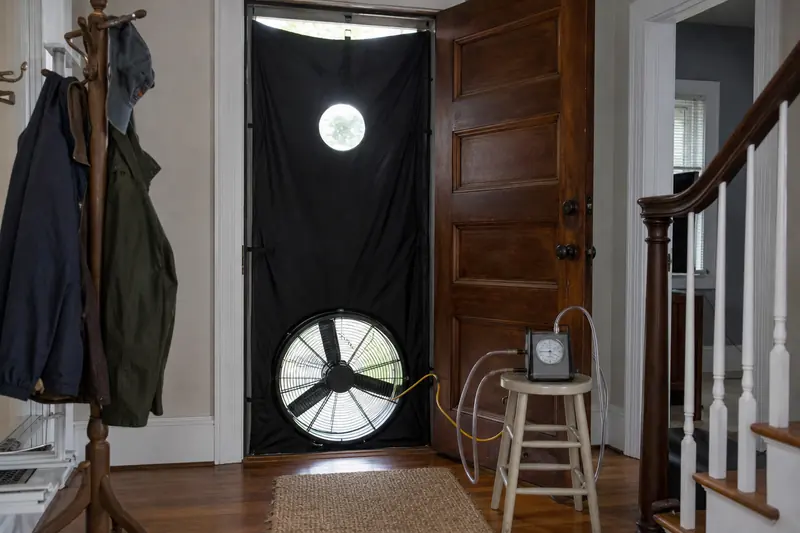
AI-made picture, not a photo of a real house Do houses need ventilation if they leak air?
Yes, because leakage is fresh air by accident. It rises and falls with wind and outdoor temperature, and it can enter through an attic, a crawl space or an attached garage instead of from clean outdoor air. The Department of Energy's building science pages say every energy-efficient home, new or existing, needs a whole-house mechanical system to keep indoor air in good shape.
Video from the U.S. Department of Energy channel on YouTube: Healthy Homes with DOE Zero Energy Ready Home Certification. That channel has no tie to Air in the House; nothing loads from YouTube except the still picture until you press play. Turn over for the detail
Spot fans help, but a bath fan or range hood clears one room for part of the day. Whole-house ventilation is a fan system sized for the whole home, running on a schedule, with the air path chosen rather than left to chance.
Sealing leaks and planned ventilation belong together: sealing alone can leave a house damp and stale, and ventilation without sealing wastes heat. The whole-house section covers both halves.
Air sealing also changes how a house reacts to exhaust fans. The Building America Solution Center notes that the tighter a crew makes a house, the greater the negative pressure the same exhaust appliances create. In a home with a gas, oil or wood appliance that isn't sealed-combustion or power-vented, that pull can draw flue gases back into the living space. If you're unsure, call a licensed pro. After any air sealing, ask a qualified technician for a combustion safety (worst-case depressurization) test before the job is called finished.
What does ACH50 mean for house ventilation?
ACH50 means air changes per hour at 50 pascals: the number of times the house's entire volume of air would leak out in an hour while a blower door holds the inside at 50 Pa below outdoors. The blower door is a calibrated fan sealed into a doorway; the airflow it needs to hold that pressure is the leakage, written CFM50.
Turn over for the detail
To turn CFM50 into ACH50, multiply by 60 minutes and divide by the house's volume in cubic feet. Lower is tighter. The test pressure is set high on purpose so results repeat, which makes ACH50 a way to compare houses rather than a measure of the air a family gets on an ordinary day.
The number matters to whoever designs your ventilation, because ASHRAE 62.2 allows a credit for natural air leakage only when a blower door test has been done. The ASHRAE 62.2 page explains that formula in plain numbers.
What does the building code require for ventilation now?
Current codes require whole-house mechanical ventilation in new homes built to the energy code's airtightness limits. Older editions used a simple trigger: the 2018 IRC R303.4, like the 2012 and 2015 editions, required mechanical ventilation when a blower-door test showed 5 ACH50 or less.
The 2021 and 2024 editions dropped that number. The 2024 IRC R325.3 ties mechanical ventilation to compliance with the energy chapter's air-leakage section, and those leakage limits are tight. The 2021 edition allows 3–5 ACH50 (5.0 in Climate Zones 0–2, 3.0 in Zones 3–8). The 2024 edition allows 2.5–4 ACH50 (4.0 in Zones 0–2, 3.0 in Zones 3–5, 2.5 in Zones 6–8), and it requires an HRV or ERV in Zones 6, 7 and 8.
Ventilation rules by IRC edition Edition When whole-house ventilation is required New-home air leakage limit 2012–2018 IRC A blower-door result of 5 ACH50 or less Not covered on this stack 2021 IRC Homes that comply with the energy chapter's air-leakage section 5.0 ACH50 in Zones 0–2; 3.0 in Zones 3–8 2024 IRC Same tie to the energy chapter (R325.3) 4.0 ACH50 in Zones 0–2; 3.0 in Zones 3–5; 2.5 in Zones 6–8 Turn over for the detail
Towns adopt code editions on their own schedule and often amend them, so ask your building department which book applies; a house built last year may follow an older one.
What builds up indoors without ventilation?
Moisture, carbon dioxide, cooking particles, combustion gases and household chemicals all build up when a tight house has no planned air exchange. Water vapor comes first: NDSU Extension estimates that each person adds 3 pints a day just by breathing. Keep indoor humidity between 30% and 50%, as EPA advises, and don't let it stay above 60%.
Carbon dioxide tracks people. Outdoor air is now about 425 ppm CO2 (NOAA, Mauna Loa, 2026). ASHRAE's standards set no health-based indoor CO2 limit, but readings that climb well above outdoor levels, roughly 1,000 ppm and up, show a room is under-ventilated.
Turn over for the detail
Cooking adds particles and, with gas burners, gases. Lawrence Berkeley National Laboratory found that single cooking events can push short-term PM2.5 above 300 µg/m³, and EPA notes that in homes with gas stoves, indoor nitrogen dioxide often exceeds outdoor levels. The gas stove ventilation page covers hood habits that help.
Soil gas is the hidden one: a house under negative pressure can pull radon up from the ground, and EPA recommends testing every home below the third floor (radon testing).
What are the signs a house is short of fresh air?
The clearest signs are windows that sweat in cold weather, smells that linger into the next day, and bedrooms that feel stuffy every morning. Each points to moisture or pollutants staying put.
- Condensation on windows. EPA notes that condensation can be a sign of high humidity. In cold weather, aim lower, around 30–40%, if the glass keeps fogging; see condensation on windows.
- Musty corners or mold spots. Damp air settling on cold surfaces such as outside-wall closets.
- Odors that hang around. If cooking smells last for hours, so do gases you can't smell.
- A hygrometer stuck high. A reading that stays above 50% indoors in winter means moisture is arriving faster than it leaves.
- CO2 readings that climb overnight. A consumer monitor showing bedroom CO2 far above the outdoor 425 ppm points to too little fresh air; see indoor air quality monitors.
Turn over for the detail
None of these proves the cause on its own. A home energy auditor or HVAC contractor can run a blower door test and measure what your existing fans actually move. A monitor is not a life-safety device; the CPSC wants a CO alarm on each floor and outside the bedrooms.
What piles up in a tight house
- 3 pintswater vapor added per person per day by breathingNDSU Extension
- 425 ppmoutdoor CO2, Mauna Loa, 2026NOAA
- 300 µg/m³short-term PM2.5 a single cooking event can exceedLawrence Berkeley National Laboratory
- 5 ACH50blower-door result that triggered mechanical ventilation in the 2018 IRCICC
- 2.5–4 ACH50new-home air leakage limits in the 2024 IRCICC
Chart drawn by Air in the House from figures cited in this stack. Source NDSU Extension · NOAA · Berkeley Lab
Next Quick cards↓
Quick cards
Short questions people ask next, one answer each.
Can a house be built too tight?
Tightness itself isn't the problem; uncontrolled air is. The Department of Energy's position is that energy-efficient homes need whole-house mechanical ventilation, so a very tight house simply needs that system designed and running.
Is opening windows enough ventilation for a tight house?
Open windows work when you remember them and the weather allows. A whole-house system keeps working at night, in winter and while you're away, and its controls must allow a manual override.
Does an older, drafty house need a ventilation system?
Often not until it's air sealed. Once a weatherization job tightens it up, plan ventilation at the same time; DOE's guidance covers existing homes as well as new ones.
Should a house be air sealed before ventilation is added?
Ideally both are planned together, with a blower door test before and after the sealing. The final test result lets the designer size the fan and, under ASHRAE 62.2, count any infiltration credit.
How can a homeowner find out a home's ACH50?
Ask for a home energy audit that includes a blower door test. New homes built to the 2021 or 2024 energy code have leakage limits, so the builder's closing paperwork may already show a tested number.
Does a tight house need carbon monoxide alarms?
Every home with fuel-burning appliances or an attached garage should have them, placed per CPSC on each level and near the bedrooms. A tight house makes that advice more pressing, not less.
Where these cards come from
Sources: the International Residential Code (2018, 2021 and 2024 editions on codes.iccsafe.org), DOE and PNNL building science pages, the ASHRAE 62.2 addendum, EPA, NOAA, LBNL and NDSU Extension, checked in October 2026. Product picks, energy-bill estimates and pressure limits for combustion testing are deliberately absent; those belong to the pro running the test.
- U.S. Department of Energy Department of Energy
- NDSU Extension NDSU Extension
- Building America (PNNL) Building America Solution Center
- ASHRAE ASHRAE 62.2
- International Residential Code 2018 IRC R303.4
- International Residential Code 2024 IRC R325.3
- International Residential Code 2024 edition
- NOAA NOAA, Mauna Loa, 2026
- Berkeley Lab single cooking events can push short-term PM2.5 above 300 µg/m³
- EPA indoor nitrogen dioxide often exceeds outdoor levels
- EPA condensation can be a sign of high humidity
Cards are written by the Air in the House editors from the documents above and dated when they were last checked. How stacks are made