Radon · start-here stack · 6 quick cards
Radon at Home: Test, Read, Fix
7 cards · By the Air in the House editors, from EPA, Home Ventilating Institute · how stacks are made · Updated
Should you worry about radon at home?
Radon is a soil gas that seeps into houses from below; EPA says test every home below the third floor and fix it if the level is 4 pCi/L or higher.
- Of the roughly 21,000 US lung cancer deaths EPA ties to radon yearly, about 2,900 are among people who never smoked.
- EPA estimates that nearly 1 in 15 US homes has elevated radon.
- EPA and the Surgeon General recommend testing all homes below the third floor.
- EPA's advice: fix at 4 pCi/L or higher, and consider fixing between 2 and 4 pCi/L.
- The average indoor level is about 1.3 pCi/L; outdoor air holds about 0.4 pCi/L.
- Sub-slab suction, the most common fix, typically cuts radon by 50% to 99%, EPA says.
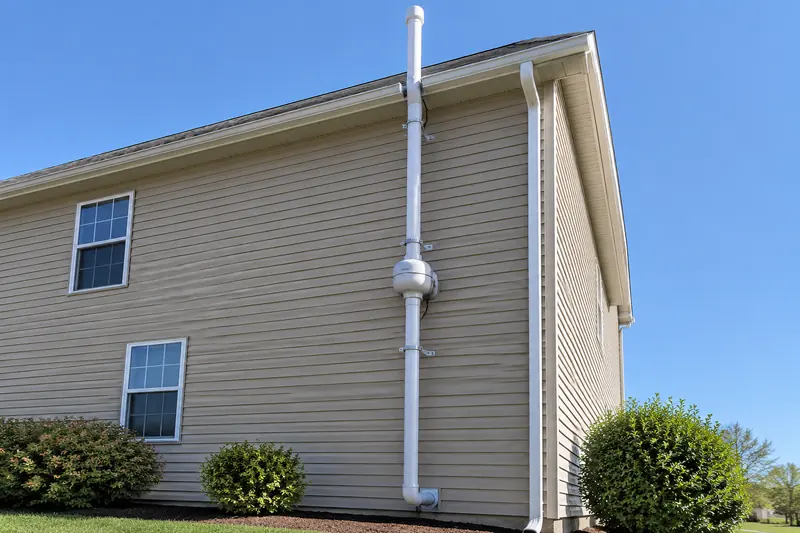
AI-made picture, not a photo of a real house What is radon and how does it get in?
Radon is a gas that comes up from the soil under a house and collects indoors, where it builds up above outdoor levels. EPA's Citizen's Guide to Radon puts typical outdoor air at about 0.4 pCi/L and the average home at about 1.3 pCi/L.
The house itself helps draw it in. Anything that lowers indoor air pressure, such as exhaust-only ventilation, can pull soil gas through cracks and gaps in the foundation; HVI's summary of DOE guidance lists radon among the things exhaust-only systems can draw in. See the whole-house stacks for how system choice affects pressure.
Stacks on this How do you test a home for radon?
What a radon result means (EPA) Result EPA guidance Next step Below 2 pCi/L Hard to reduce further Retest after renovations or a move to a lower floor 2 to under 4 pCi/L Consider fixing Weigh a fix; retest later 4 pCi/L or higher (first short-term) Follow-up test Long-term test, or a second short-term test Above 8 pCi/L (first short-term) Act quickly Second short-term test immediately Confirmed 4 pCi/L or higher Fix the home Hire an NRPP- or NRSB-certified mitigator Should every home be tested?
Yes: EPA and the Surgeon General recommend testing every home below the third floor, with or without a basement. Short-term tests stay in place 2 to 90 days; long-term tests run more than 90 days and better reflect the year-round average.
Place the kit in the lowest level you use regularly, in a lived-in room that isn't a kitchen or bathroom, at least 20 inches off the floor and away from drafts, heat, humidity and outside walls. For short tests, keep windows and outside doors shut, starting 12 hours before a 2- or 3-day test. EPA's kit and professional finder notes that some states offer free or discounted kits.
Stacks on this How do you test a home for radon?
Video from the Pennsylvania DEP channel on YouTube: Test Your Home for Radon: It’s Important, and Easy. That channel has no tie to Air in the House; nothing loads from YouTube except the still picture until you press play. What do the numbers mean?
EPA's line is 4 pCi/L: fix the home at that level or higher, and consider fixing between 2 and 4 pCi/L. EPA's radon health risk page adds that getting below 2 pCi/L is difficult.
One test rarely settles it. If a first short-term test reads 4 or more, follow up with a long-term test or a second short-term one; if it reads more than twice 4 pCi/L, run the second short-term test right away. EPA then says to fix after a long-term result of 4 or more, or when the average of two short-term tests is 4 or more.
Stacks on this What does your radon number mean?
Source EPA
Next How is radon fixed?↓How is radon fixed?
Usually with a vent pipe and fan that pull radon from under the slab and release it outdoors, a method called sub-slab suction or depressurization. EPA's Consumer's Guide to Radon Reduction calls it the most common and usually most reliable approach, with typical reductions of 50% to 99%; sealing cracks helps but isn't enough alone.
Every active system needs a warning device that alerts you if it stops working, and the fan should never be switched off. Retest within 30 days of installation, but no sooner than 24 hours after the fan starts, and again at least every two years.
Stacks on this How is a radon problem fixed?
Who should do the work?
A certified radon professional, credentialed by the National Radon Proficiency Program (NRPP) or the National Radon Safety Board (NRSB), or holding a state license in states that issue one. EPA says most homes can be fixed for about the cost of other common home repairs, so get more than one estimate.
Do not try to install a mitigation system yourself; the fan, piping through the house and any roof penetration are trade work. If you're unsure, call a licensed pro. Your state radon program can point you to credentialed testers and mitigators, and EPA asks for a retest after major renovations or once you start living on a lower floor.
Stacks on this How is a radon problem fixed? What does your radon number mean?
Source EPA
Next Radon numbers↓Radon numbers
- 21,000yearly US deaths EPA attributes to radonEPA
- 1 in 15US homes EPA estimates have elevated radonEPA Citizen's Guide
- 1.3 pCi/Laverage indoor radonEPA Citizen's Guide
- 50–99%typical cut from sub-slab suctionEPA Consumer's Guide
Chart drawn by Air in the House from figures cited in this stack. Source EPA
Next Quick cards↓
Quick cards
Short questions people ask next, one answer each.
Where can you get a radon test kit?
EPA says kits are sold online and in stores, and some state radon programs offer them free or at a discount.
How do you find a certified radon professional?
Look for NRPP or NRSB certification, or a state license where your state requires one. State radon programs keep lists, which EPA's state agency directory links to.
Is radon covered by the building code?
Only where adopted. The 2024 IRC includes an optional appendix, Appendix BE (Radon Control Methods), which applies only if your town or state adopts it.
Should a radon fan ever be turned off?
No. EPA says the fan should run continuously; check the warning device or gauge regularly so you know it's working.
How long does a radon fan last?
EPA says fans often last five years or more; the warning device tells you when one fails.
Do apartments above the third floor need a radon test?
EPA's recommendation covers homes below the third floor. Units higher up fall outside it, though a test does no harm.
Where these cards come from
Sources: EPA's Citizen's Guide and Consumer's Guide to Radon Reduction (2016), EPA's radon health and test-kit pages, EPA's state agency list, HVI's summary of DOE ventilation types and the 2024 IRC appendix list, read October 2026. Left out: any dollar figures for mitigation, phone numbers, and state-by-state maps.
- EPA roughly 21,000 US lung cancer deaths EPA ties to radon yearly
- EPA Citizen's Guide to Radon
- Home Ventilating Institute exhaust-only systems can draw in
- EPA EPA's kit and professional finder
- EPA Consumer's Guide to Radon Reduction
- EPA state radon program
Cards are written by the Air in the House editors from the documents above and dated when they were last checked. How stacks are made