Whole house · stack · 7 quick cards
Attached Garage Air and Your House
7 cards · By the Air in the House editors, from NIST, CPSC, Home Ventilating Institute, EPA and other documents · how stacks are made · Updated
How do you keep garage fumes out of the house?
Attached garage air leaks into living space through the connecting door, wall cracks and ducts, carrying car exhaust and fuel fumes; a tight self-closing door, no idling and CO alarms keep it out.
- NIST found pressure differences push garage pollutants into homes, from car CO (acute) to stored chemicals (chronic).
- In NIST's five-home field test, every garage was at least twice as leaky as the house it was attached to.
- A Health Canada study of 33 Ottawa homes found a garage exhaust fan cut gasoline-related pollutants in the living room by 43–62% and CO in the house by 23%.
- CPSC says never leave a car running in an attached garage, even with the garage door open.
- IRC R302.5.1 bans a door from the garage straight into a bedroom and calls for a self-closing, self-latching door of 1-3/8 in. solid wood or steel, or a 20-minute rated door.
- CPSC wants CO alarms on every level of the home and outside sleeping areas.
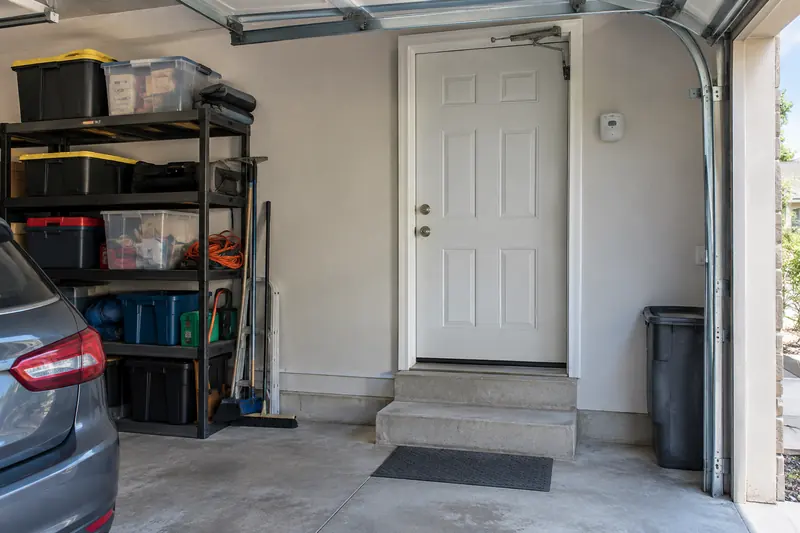
AI-made picture, not a photo of a real house How does attached garage air get into the house?
Attached garage air gets in through any gap between the two spaces whenever the house is at lower pressure than the garage. A NIST literature review and field study found that natural or fan-driven pressure differences move pollutants across the house-garage wall, ceiling and door. In the five homes NIST measured, the garage was always at least twice as leaky as the house, so outdoor wind and temperature push garage air around easily.
Turn over for the detail
The usual paths are the connecting door and its frame, cracks and holes in the shared wall, gaps around pipes and wires, a ceiling under a bonus room, and ducts that pass through the garage. Health Canada lists doors and wall cracks as the main entry points for the fumes it studied.
Fans in the house make the pull stronger. Bath fans, range hoods, dryers and an exhaust-only ventilation system lower the pressure indoors, and the Home Ventilating Institute names attached-garage fumes among the things exhaust-only ventilation can draw in. The exhaust, supply or balanced page explains the trade-off.
What fumes come from a garage?
A garage gives off two kinds of pollution: sudden, dangerous carbon monoxide from engines, and slow, steady vapors from fuel and chemicals. EPA's carbon monoxide page lists car exhaust from attached garages as a household CO source and says plainly: do not idle the car inside the garage.
Health Canada's attached-garage study adds benzene and other volatile organic compounds from vehicles, lawn mowers and snow blowers, and from stored fuels, cleaners, solvents and paints. These are the chronic risks NIST describes: low levels, every day, for years.
Common garage pollution sources Source Main pollutant What helps Car started or idling Carbon monoxide, benzene Back straight out; never idle inside, even with the big door up Lawn mower or snow blower Carbon monoxide, fuel vapor Start and run it outdoors; store fuel tightly capped Gas cans, solvents, paints Benzene and other VOCs Keep containers sealed; keep only what you need Portable generator Carbon monoxide Run outside only, at least 20 ft from the house (CPSC) What does the code say about the garage door and wall?
The code says the garage may never open straight into a bedroom, and every other door between the garage and the house must be solid and close by itself. IRC Section R302.5.1 calls for a solid wood door at least 1-3/8 in. thick, a solid or honeycomb-core steel door at least 1-3/8 in. thick, or a 20-minute fire-rated door, and the door must be self-latching with a self-closing or automatic-closing device.
Turn over for the detail
Section R302.5.2 covers ducts. Ducts in the garage, or passing through the walls or ceilings that separate it from the house, must be at least 26-gauge sheet steel or another approved material, with no openings into the garage. A supply or return grille in the garage wall is a warning sign; ask an HVAC contractor to look at it. Your local code may differ, so check with your building department before changing doors or ducts.
These rules were written mainly with fire in mind, but a solid, self-closing door that latches is also a strong barrier against fumes.
What can you seal or change yourself?
You can fix the habits and the obvious gaps yourself; anything electrical, structural or involving a fuel-burning appliance belongs to a pro. Start with the door: close it, let go, and watch whether it shuts and latches on its own. Worn weatherstripping and a missing threshold seal are common leaks around it, and a carpenter can fit or adjust a door closer.
Turn over for the detail
- Never warm up a car in the garage. Pull out as soon as it starts, and back in and switch off promptly.
- Keep fuel, solvents and paints in closed containers, and keep only what you'll use soon.
- Run mowers, snow blowers and generators outdoors only.
- Fill small gaps around pipes in the shared wall with caulk or fire-rated sealant suited to that spot.
- Ask an HVAC contractor about any duct or grille that opens into the garage.
If a furnace or water heater sits in the garage, never block, seal or cover its air openings, louvers or vents while sealing gaps; it needs that air to burn safely. CPSC urges a yearly professional inspection of fuel-burning appliances, vents and chimneys. A garage exhaust fan like the ones in the Health Canada study needs wiring by a licensed electrician and a wall or roof opening cut by a contractor. If you're unsure, call a licensed pro.
Source the documents listed on this stack's sources card
Next Why do CO alarms matter here?↓Why do CO alarms matter here?
CO alarms matter because carbon monoxide has no smell or color, and an attached garage puts one of the biggest household sources a single door away. CPSC's CO center asks for battery-operated alarms, or alarms with battery backup, on every level of the home and outside sleeping areas, and it estimates that more than 200 people in the US die each year from accidental non-fire CO poisoning linked to consumer products.
Turn over for the detail
CPSC also wants alarms that meet the current UL 2034 standard, and notes that the test button checks the circuit, not the sensor. According to its Q&A, most people have no symptoms at 1–70 ppm (though some heart patients may), symptoms grow above 70 ppm, and sustained 150–200 ppm can cause disorientation, unconsciousness and death. A room-air monitor isn't a substitute; the air quality monitor page explains why a UL 2034 alarm is a separate device.
If a CO alarm goes off, the only job is to get people out. Don't hunt for the source, don't flip switches, and don't make calls from inside. Once everyone is outdoors, call 911 or the gas utility.
Garage air in numbers
- 43–62%Drop in gasoline pollutants in the living room with a garage fanHealth Canada
- 23%Drop in CO inside the house with the fan runningHealth Canada
- 2xGarage leakage versus the house, at minimum, in NIST's field testNIST
- 1-3/8 in.Minimum thickness of a solid garage-to-house doorIRC R302.5.1
- 200+Yearly US non-fire CO deaths tied to consumer productsCPSC
Chart drawn by Air in the House from figures cited in this stack.
Quick cards
Short questions people ask next, one answer each.
Is it safe to warm up a car with the garage door open?
No. CPSC says never leave a car running in an attached garage, even with the garage door open. Start the car and pull straight out.
Why does the house smell of gasoline near the garage door?
Health Canada found that vapors from cars, mowers, snow blowers and stored fuel get into homes through doors and wall cracks. Check that the connecting door closes and latches, cap fuel cans tightly, and ask a carpenter about worn weatherstripping. If the smell is the rotten-egg odor of natural gas or propane instead, don't investigate: get everyone out, then call 911 or the gas utility from outside.
Does a garage exhaust fan help?
In Health Canada's 33-home study, a garage fan vented outdoors lowered gasoline-related pollutants in the living room 43–62% and CO in the house 23%. Inside the garage, pollutants fell 80% and CO 61%. Installing one is a job for an electrician and contractor.
Can a bedroom door open into the garage?
No. IRC R302.5.1 forbids any opening from a private garage directly into a room used for sleeping.
Should a CO alarm go in the garage itself?
CPSC's guidance is every level of the home and outside sleeping areas, which puts alarms in the living space. Follow the alarm's manual for placement near garages.
Is it okay to store a gas can in an attached garage?
Fuel vapors are one of the chronic sources Health Canada and NIST point to. Keep cans tightly capped, keep only what you need, and store them away from the house door.
Can a portable generator run in the garage during an outage?
Never. CPSC says portable generators go outside only, at least 20 ft from the house, and open doors and windows won't stop deadly CO from building up.
Where these cards come from
This stack relies on NIST's attached-garage literature review and field study, Health Canada's attached garage intervention study (2017), EPA's carbon monoxide page, CPSC's CO center and Q&A, the Home Ventilating Institute and the 2024 International Residential Code, all read in October 2026. It gives no wiring or fan-installation steps and names no alarm brands.
- NIST NIST
- CPSC CPSC
- Home Ventilating Institute Home Ventilating Institute
- EPA EPA's carbon monoxide page
- International Residential Code IRC Section R302.5.1
- CPSC CPSC's CO center
Cards are written by the Air in the House editors from the documents above and dated when they were last checked. How stacks are made